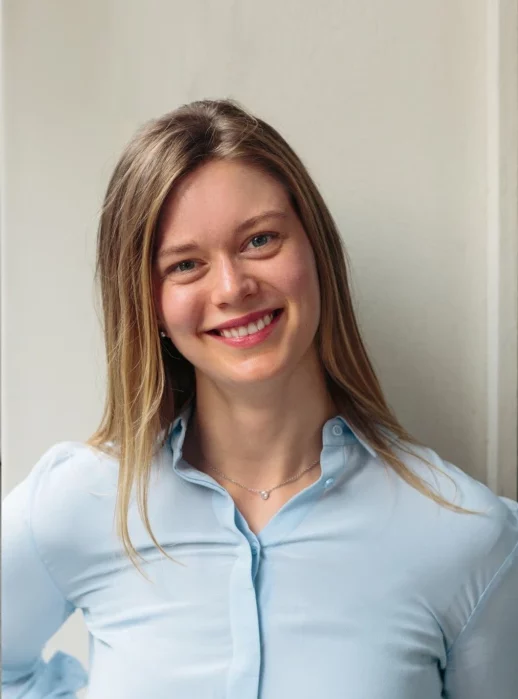
Author: Stuart Horwitz

Contact Us Today for a
Free Consultation

Heed The Click: Writing & Intuition

You may not know this, but I have a master’s degree in literary aesthetics. That might sound fancy, but we basically learned about one thing: aesthetics –art, in other words –operates by intuition.  

That means that writing well, writing about what matters, writing something worth reading is all about tuning into our intuition. 

Now, intuition doesn’t give you a read out like a thermostat. It’s not like one of those bank account apps where you can flick on and see the percentage of your discretionary income that went to eating out. It’s a feeling you have to be quiet enough to hear, a feeling that often squashed by life’s obligations, by the many instances we’re beholden to following someone else’s instructions.  

But knowing where to go with your writing, inviting intuition to the fore, can be as simple as dwelling on what would be fun versus what sounds like a drag. Consider the topics, the genres, the moments that feel the most vibrant to you. Listen for the click. 

Yes, heed the click. That might sound vague, but you know when there’s a yes — in terms of a project, a character’s motivation, or even a paragraph. You can feel when there’s a that’s what I should do; that’s what I care about; that really moves me. You can also very much feel when it’s, I don’t care about that shit

If you can tune into that frequency, it makes everything easier. It’s easier in the beginning, when you’re getting started. It’s easier in the middle, when you’re deciding what to leave out and what to work on more. It’s easier at the end when someone gives you unhelpful feedback and you know, “It doesn’t make sense to do that. That’s not the click.” 

So, heed the click, but also, wait for it. It’s okay — no, it’s ideal — to start a writing project with little more than a vague sense of something you find interesting, or worrisome, a thing that makes you think: “Wow, I’d really like to write about that but it would mean I would also have to deal with this.” 

Trust the process. Sit with the moments that present themselves to you and ask yourself what’s drawing you to them. Think of it like you’re an experienced marine excavator. When you hit a piece of rusted metal with a barnacle on it, you might decide, “Well, that’s obviously nothing.” But the veterans know, “Well, maybe it’s nothing. But maybe it’s attached to the hull of a Spanish galleon.” And then they pull it up and there are doubloons inside. 

Now, that hazy hope is not a lot to stand up against the internal dialogue which is always there, even for writers who’ve been practicing for a long time. This is the voice saying, That’s stupid; that’ll never turn into anything, and certainly not anything good. Certainly not as good as what you did last time. There is plenty of anti-intuitive dialogue around and it is entirely unhelpful.

The point is: don’t be looking at that little piece of metal that scraped your leg and made you bleed and decide it’s nothing. Slog deeper into the mud. Your intuition is not going to lead you astray, but it’s also not going to tell you everything all at once because you wouldn’t know what to do with it all. Keep moving forward, even when you’re not entirely sure where you’re headed. It will be clear in time, once the mud has settled and you’re holding that gold coin in your hand.

To that end, I leave you with the words of novelist E. L. Doctorow: “Writing is like driving at night in the fog. You can only see as far as your headlights, but you can make the whole trip that way.”


Clients Crushin’ It: Kathy Kleiman

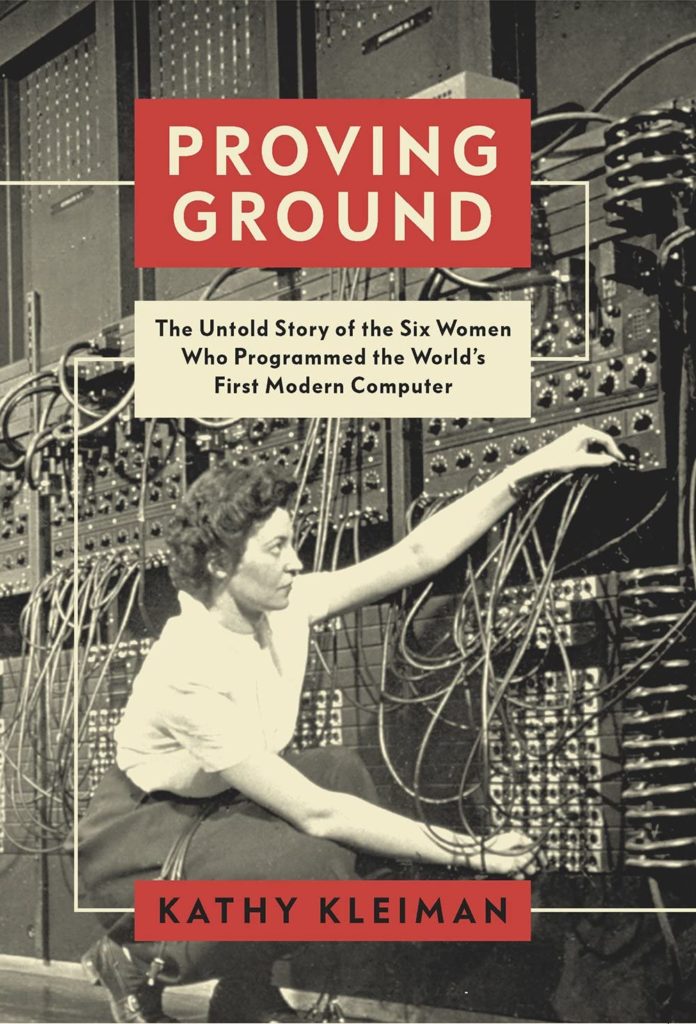
Madison Utley speaks to Kathy Kleiman following the release of her first book, Proving Ground: The Untold Story of the Six Women Who Programmed the World’s First Modern Computer, a detailed history–and, perhaps more importantly, a celebration–of the female pioneers who triumphed against sexism and technical challenges to invent computer programming.


Q: I understand that Proving Ground is the first writing project of this scale you’ve undertaken, so can you tell me a bit about what motivated you to write this book?

I am a public interest internet lawyer and a professor of intellectual property and internet governance. Normally I write legal things: comments, articles, advocacy pieces. Writing books is not my forte, so a full-length narrative story was quite the challenge. 

That said, I knew this story–the story of the programming pioneers who worked on a secret Army project during WWII–had to be told. These six women programmed the ENIAC, the world’s first general-purpose, programmable, all-electronic computer, which is the grandfather (or, dare I say, grandmother) of today’s laptops and smartphones.

I had known for many years I was sitting on a great story that contradicted the one I was taught in my computer science courses. The truth is the history of early computing, and the ENIAC project at the University of Pennsylvania during WWII, was quite diverse. The team included women and men, new immigrants, and people with diverse religious and ethnic backgrounds. That diversity was key to the team’s success in creating a new technology and ushering in the Information Age.

Whenever I hit a snag while writing, and I encountered many, I thought about my students and my desire to attract the next generation of young women and young men to STEM and STEM policy work. There is so much opportunity in these fields, with many jobs open today and millions more projected to open in the next few decades. This history inspired me to seek my career and I hope Proving Ground will inspire others to explore this space too.

Q: Can you talk about how the research process unfolded?

My undergraduate thesis at Harvard centered around the women at the heart of Proving Ground, the ENIAC Programmers. But 10 years after that, I found out most of those women hadn’t even been invited to the 50th anniversary of ENIAC because no one other than the original generation they worked with knew their story. As I saw it, that was a big problem. 

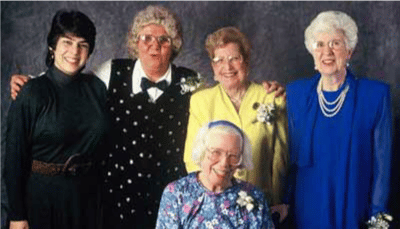
In 1997, I got a grant to continue my research. I spent six months in the Library of Congress, among other archives, researching materials. I then interviewed four of the original six ENIAC Programmers, resulting in 20 hours of broadcast quality oral histories. I wanted to turn the cameras on them and let them tell their own stories. They did it wonderfully, beautifully, creatively. They’re funny. They’re brilliant. They were in their late 70s and early 80s at that point in the late ‘90s. They really became my mentors and role models. It’s their voices that I try to bring out in the book.

These interviews resulted in my co-producing the documentary, The Computers: The Remarkable Story of the ENIAC Programmers. We premiered at the Seattle International Film Festival and then won the Grand Jury Prize for Best Documentary Short from the United Nations Association Film Festival.

The demographic of a typical audience for a PBS documentary is 50+ year old, well-educated, white people but I explained, “No, we’re making this for everyone 12 and up.” So in telling the story, we didn’t assume any prior knowledge about the war, and we didn’t assume any technical knowledge either. We really wanted the film to be accessible to everyone, and that was something we tried to carry into the book as well. 

It was an honor to watch the surviving programmers finally get some of the recognition they deserved, to watch them light up, to watch the audience at the screenings light up, and to watch the young women converge around them after, laughing and crying at the same time, wondering how they had never known this history.

Q: How did the process look different as you then prepared to tell the story through the medium of a book? 

I had thousands of pages of research in my house, much of it in paper form. And while it may have been challenging to organize, thank goodness for that, because during COVID the libraries and archives were closed. I took over the den. The floor space became my filing space. I had piles of papers sorted by chapter spread across the room, that I was trying to arrange into a sequential story; at the same time, once I got into the later, technical chapters, I was really trying to break down a rather obscure method of direct programming which is both modern and esoteric at the same time. I was writing for a general audience, so I knew I had to make it accessible and I couldn’t “talk tech.”

Q: What role did Stuart play in getting Proving Ground out into the world? 

Stuart was many things. He was an editor, but he was also the audience. He is someone who was incredibly well prepared to read this book on its different levels–the technology, the history, the law–and help make it accessible. He could answer: Did I get it right? Was I explaining this all well? 

Stuart was also a sounding board; he was an encourager–Encourager, capital E; he was an architect. A lot of times, I felt like I was writing for him as I shared these stories. Then we’d get together and discuss if I had hit the marks and he would help me make sure we got it even better. We were working on a fast timeframe and he was turning things around very quickly, which I appreciated. 

But perhaps most importantly, Stuart encouraged me to say what I wanted to say. With so many historians pushing against this story for so many years, telling me not to say what I wanted to say, it was powerful for me to hear, “Go ahead and say it. We’ll massage it into the right words after. For now, just say what you need to say.”

Q: Your book came out a month ago now. How does it feel to have it circulating in the world, and what kind of feedback have you been getting?

It’s very exciting. Publisher’s Weekly was the first to come back and say nice things about it. They loved it. Across the board, people seem to really be diving into this book and they’re seeing what I saw–that this is an inspirational story. My book has also made it onto some ‘Hot Summer Reads’ lists which I could have never have conceived happening, seeing as it’s a story about six techy women programming a 30-ton computer nearly 80 years ago. But it’s great.

I’m also getting a lot of fan mail, including from men. Many are telling me how moved they are by this history and others are asking questions, but my favorite are those who have been inspired by the book to tell me the stories of their own mothers, grandmothers, or great aunts–the women they know in tech who encouraged them to go into the field.

Stuff We Love: Read This if You Want to Be A Great Writer

Writers of craft books on writing still read craft books on writing. It would be dangerous to think you know everything. Of course, it’s easier when that book is published in the UK. There’s not so much competition.

Read This if You Want to Be a Great Writer - BIS PublishersOr maybe I’m wrong. Have you heard of the book Read This If You Want To Be a Great Writer by Ross Raisin? The title is pretty sales-y, although I hear aspirational marketing works wonders. (For the record, I did not come up with the title, Blueprint Your Bestseller, either.)

Then I found out that what’s they call all the books in the series, Read This If… you want to be great at drawing, at taking photographs, etc. I was contemplating the move to writing my first fiction in thirty years. I better buy a book.

Broken into roughly sixteen categories, ranging from Place to Sex to Planning, I learned new things throughout. I also felt empowerment to apply what I already knew across the looming bridge from creative nonfiction to made-up storytelling. 

But hey, that’s my process. You will have your own experience of this book by the British novelist, Raisin. To entice you further to buy it (note absence of affiliate links), here are a few of my favorite quotes:

“The plan you drew up at the end of your first draft will have more value than any plan you make before the first draft.”

“If you are stumped for the point at which to enter the narrative it may be helpful to forego, for now, an adherence to writing in a linear way from beginning to end.”

“Some works of fiction that play with preconceived notions of what fiction is supposed to look like can be so compelling that they create their own market. When form is bent to something new, your previously programmed way of reading a text can be, too.”

I think I realized that — as perhaps is true in all genres — it is the voice that beckons to us first. Ross’s expertise is combined with his confidence and warmth to make it feel like it is not such a cold world. I recently heard from one of my readers, “I just read your first book and I’m on your second book. I just wanted to let you know that I loved the graphics, humor, and voice. As I read, I felt as if a real person was talking to me and explaining the process. Most books I’ve read thus far have yet to have that same effect…”

I mean, that’s why we write craft books. It doesn’t send the kids to college. But maybe it helps a few lifelong learners along the way.


The Semiotics of Theater

Write in scene. It’s something us craftspeople always hector writers with. We go so far as to say: if it’s not in scene, you can’t keep it.

In Finish Your Book In Three Drafts I say there are five definitions of scene. The first: “A scene is where something happens.” The second: “A scene is where because something happens, something changes.” (Read about the other three here.)

But maybe giving a few definitions, or admonishing people to “show, don’t tell,” isn’t enough. So, I went back into my graduate studies to ask myself, what does it mean to write in scene? What even is a scene?


I returned to theater and film to explore how a scene can be constructed. They call it semiotics, the various sign systems through which a story can be expressed. I made a list of 16 of them, grouped into 11 categories, from multiple sources. Here goes:

  • Gesture. We pick up a lot of meaning from the way people use their hands, the relative state of openness of the torso, and so forth. This also covers Facial Expressions.
  • Tone. We often assign adverbs to describe how someone said something. Less often do we think about the character as an actor, about the word choice and word order that will best let them hit the tone of voice they have to.
  • Dialogue. In plays and movies, they rarely waste a word. And they don’t use dialogue to describe things people already know. They let people interrupt each other, lie, talk about two different things at once… all the things you will hear at your local coffee shop today.
  • Lighting. I don’t know how this applies to creative writing, actually. Ditto Background Music, But it’s on the list…so maybe you can tell me?
  • Costume. Yes, what people wear! On purpose, by negligence. This also extends to Make-up, Hair Style, and even Accessories.
  • Action. People stomp about, kiss, throw things — and maybe break them, leave, get on their knees and beg forgiveness — and that’s just in the course of one argument.
  • Prop.This one I think we are all familiar with. See this PDF for thoughts about how a repeating object becomes a symbol.
  • Scenery. I don’t have a lot of patience for word-painting, or writers who try to reach their word count by lavishly describing everything their eyes can see. But it is still important to clue people into the context of an action. Are we inside or outside? What time of day is it? And beyond that, reaching people through the senses — what it smells like, what Sound Effects people can hear intermittently — brings them into the scene in a way that few other maneuvers can.
  • Number of Actors. A whole sign system is based on whether there is only one person present, an intimate few, or we have the makings of a crowd. And this is relevant not only to what can happen in the scene, but also to how it feels to the viewer (reader), what they can expect to happen, and how they understand what the scene means.
  • Awareness of the Audience. Another conceptual sign system worthy of contemplation. Are we, as the audience, at an impossible remove from the action? Do the characters have some sense we there, as if we might be extras? This might be communicated with an intimacy of tone. Or do they address us directly, as in an aside that breaks the fourth wall?
  • Diction. This will be the focus of a future blog, the level of verbal expression, including word choice and dialect. Let’s just say here that how fastidious a character is, and where they got their ideas (that is still reflected in the traces of how they express them), is a whole thing in and of itself.

It’s a lot to keep in mind. And really, I only produce this list so that, when you are stuck in one particular scene, you might glance at it, and say: Lighting! That is how I will show the crux of the situation as it modulates into a new reality that all the characters present must now cope with. 

And hey, if you do pull that off, let me know how you did it?